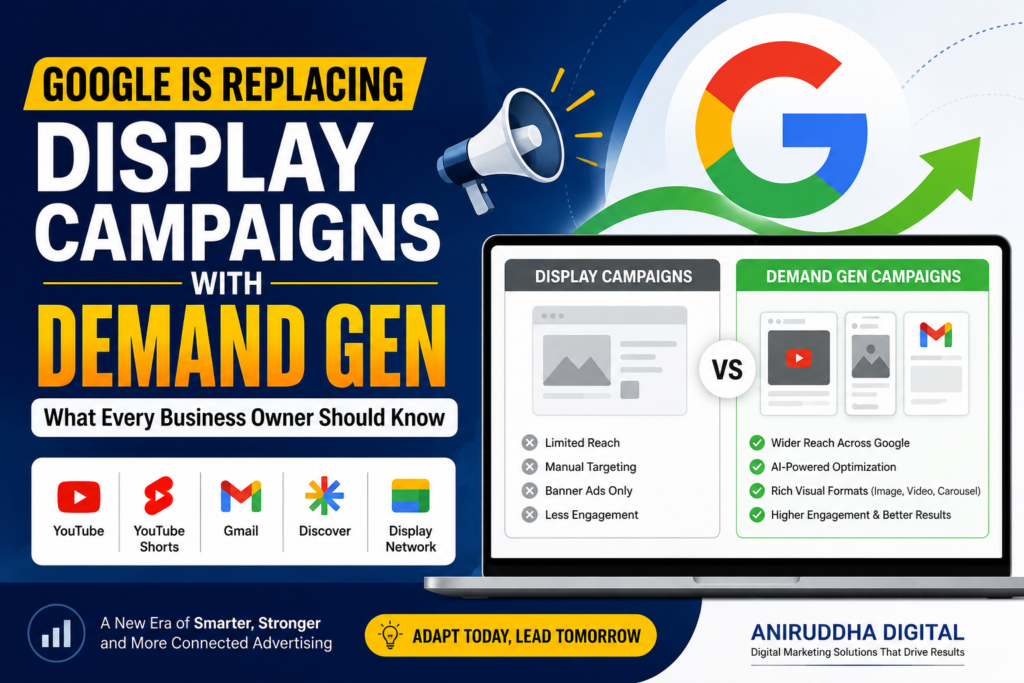
Google Is Replacing Display Campaigns with Demand Gen: What Every Business Owner Should Know
By Aniruddha Ghosh, Digital Marketing Consultant
If you have been running Google Display Ads for your business, an important change is coming that could affect your advertising strategy in the next few years.
Google has officially announced that traditional standalone Display Campaigns will gradually be replaced by Demand Gen Campaigns. This transition starts in 2026 and is expected to continue through 2027.
For many business owners, this may sound technical, but the impact is significant. In this article, I will explain what is changing, why Google is making this move, and how businesses can prepare.
What Are Google Display Ads?
Google Display Ads are the banner advertisements you see while browsing websites, mobile apps, and online platforms.
For years, businesses have used Display Campaigns to:
- Increase brand awareness
- Retarget website visitors
- Generate leads
- Promote products and services
These ads appear across millions of websites within the Google Display Network (GDN).
What Is Demand Gen?
Demand Gen is Google’s newer advertising campaign type designed to help businesses reach potential customers before they actively search for a product or service.
Instead of focusing only on websites, Demand Gen campaigns can show ads across:
- YouTube
- YouTube Shorts
- Gmail
- Google Discover
- Google Display Network
This creates a more connected advertising experience across Google’s visual platforms.
Why Is Google Making This Change?
Consumer behavior has changed dramatically over the last few years.
People no longer discover products only through search engines. They spend time watching videos, scrolling feeds, checking emails, and consuming content across multiple platforms.
Google wants advertisers to reach customers wherever they spend their time online. Demand Gen combines multiple placements into a single campaign and uses AI to optimize performance automatically.
In simple terms, Google is moving from channel-based advertising to audience-based advertising.
What Happens to Existing Display Campaigns?
The good news is that the Google Display Network is not disappearing.
Only the campaign type is changing.
Google has confirmed that advertisers will still be able to run ads on Display Network inventory. However, those ads will eventually be managed through Demand Gen campaigns instead of traditional Display campaigns.
Google will also provide migration tools to help advertisers move existing campaigns into Demand Gen.
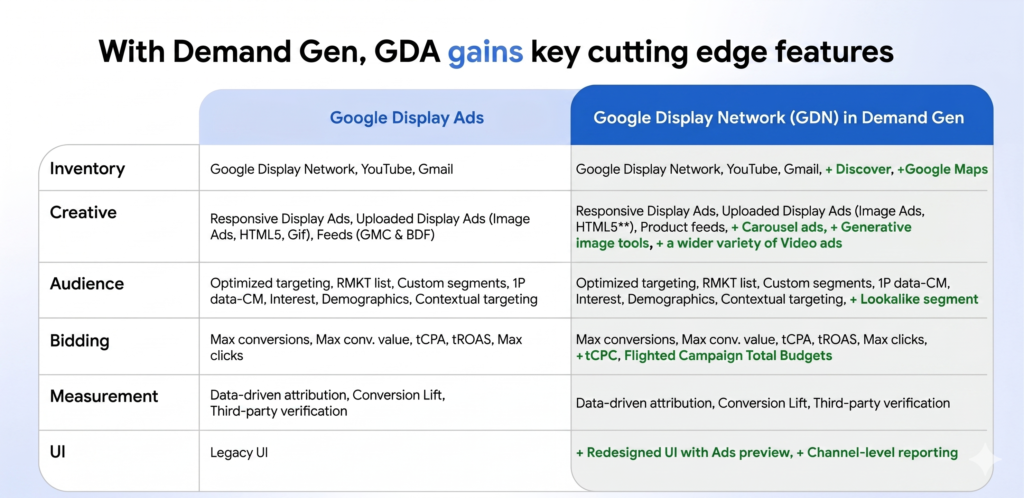
Advantages of Demand Gen Campaigns
1. Wider Reach
A single campaign can reach users across multiple Google platforms instead of relying only on display placements.
2. Better AI Optimization
Google’s machine learning system can automatically identify users who are more likely to engage and convert.
3. Stronger Visual Advertising
Demand Gen supports modern creative formats such as:
- Videos
- Carousels
- Vertical creatives
- Image-based storytelling
These formats often perform better than traditional banner ads.
4. Improved Audience Targeting
Businesses can use first-party customer data and advanced audience signals to find similar potential customers.
What Challenges Can Advertisers Face?
While the update offers many advantages, there are also challenges.
Reduced Manual Control
Traditional Display Campaigns gave advertisers detailed placement control.
Demand Gen relies more heavily on automation and AI optimization.
Learning Curve
Businesses and marketing teams will need to learn new campaign structures, reporting methods, and creative requirements.
Creative Demands
Success with Demand Gen often requires better visual content, including:
- High-quality images
- Short videos
- Professional ad creatives
Businesses using only static banner ads may need to upgrade their creative strategy.
My Recommendation for Business Owners
As a digital marketer, I believe businesses should not wait until Google forces the migration.
Instead:
- Start testing Demand Gen campaigns now.
- Build strong video and image assets.
- Install proper conversion tracking.
- Create audience lists from website visitors.
- Compare Demand Gen performance with existing Display campaigns.
Early adopters will have more time to learn and optimize before the full transition arrives.
Final Thoughts
Google’s decision to move Display Campaigns into Demand Gen reflects a larger trend in digital advertising: automation, AI, and cross-platform audience targeting.
The businesses that adapt early will likely gain a competitive advantage.
If your company currently relies on Google Display Ads, now is the right time to start exploring Demand Gen campaigns and prepare for the future of Google advertising.
Digital marketing is constantly evolving, and staying ahead of these changes can help businesses generate better leads, stronger brand awareness, and higher returns on advertising investment.

Leave a Reply